The Rollercoaster History of Sikkim
Kings, Intrigue, and a Tug-of-War.
If you think Sikkim is just about monasteries, orchids, and dramatic mountains, well - hold up. The state has a political history that’s basically part Game of Thrones, part colonial drama, and part survival manual for a tiny Himalayan kingdom caught between much bigger neighbors. Let’s rewind a few centuries and dig into how this little mountain realm went from being ruled by its Chogyals (monk-kings) to eventually becoming the 22nd state of India.
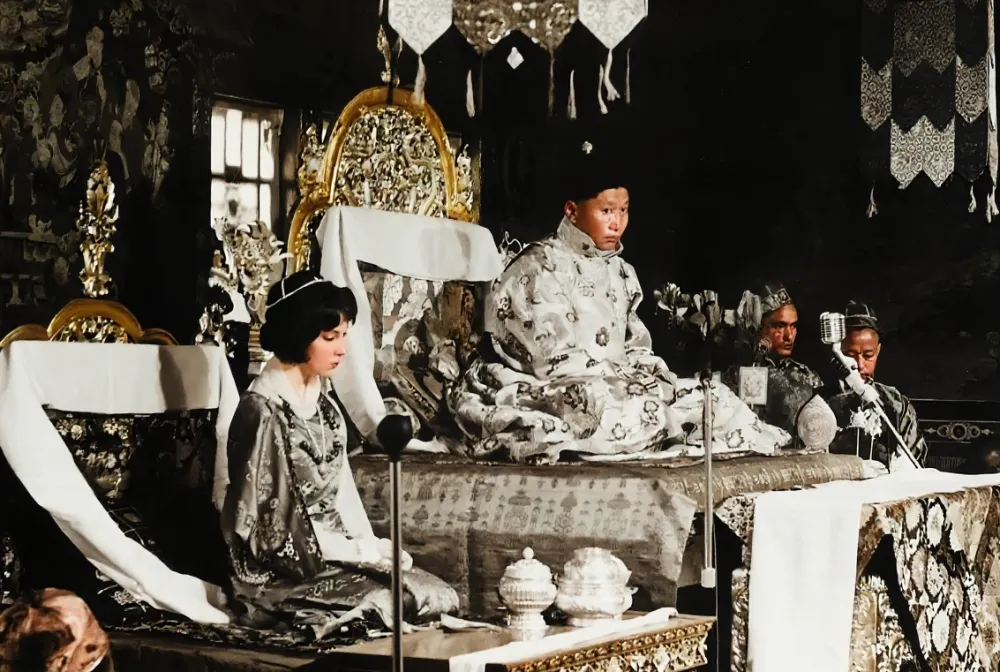
The Namgyals Step Onto the Scene
Sikkim’s “modern” history really begins in 1642, when Phuntsog Namgyal was crowned the first Chogyal (both a religious and temporal king). But the family’s roots go even deeper. Back in the 1200s, a prince named Khye-Bumsa from the Minyak House in Eastern Tibet came south, married into a powerful family connected with the Sa-Kya Monastery, and eventually settled in the Chumbi Valley. He struck a blood-brotherhood pact with Thekongtek, the Lepcha chief, at Kabi Longtsok. That little handshake (well, probably not a handshake - more like a ritual with some serious gravity) laid the foundation for Sikkim’s future monarchy.
From then on, the Lepchas and the Namgyals built a bond, though it wasn’t always smooth. Guru Tashi, a descendant of Khye-Bumsa, later moved to Gangtok and was called upon by fragmented Lepcha clans to lead them. Boom - just like that, the groundwork for a hereditary monarchy was in place.
The First Kings: Capitals, Councils, and Consolidation
Phuntsog Namgyal didn’t just sit on a throne. He moved his capital to Yuksam, set up a centralized administration, and divided Sikkim into twelve districts (dzongs), each headed by a governor. Imagine the effort of building a kingdom in a region where just walking from one village to another could take days.
His successors kept the throne alive, though not without plenty of family feuds and external meddling. Tensung Namgyal shifted the capital to Rabdentse. Then came Chador Namgyal, whose half-sister Pedi Wangmo basically played the villain in this chapter. She brought in Bhutanese forces to try and take him out. Chador had to flee to Lhasa, but he returned later, kicked out the Bhutanese, and started building important monasteries like Pemayangtse. Still, betrayal came from within - Pedi Wangmo eventually had him killed in a scheme involving, of all things, bloodletting gone wrong. Talk about family drama.
Wars With Bhutan, Nepal, and… More Bhutan
The Chogyals didn’t have it easy. Gyurmed Namgyal’s short reign saw losses to Nepal, while his son, Namgyal Phuntsog, faced constant invasions from the expanding Gurkhas. It wasn’t just one or two skirmishes - Nepal attacked so many times it became practically routine. At one point, they broke a peace treaty and occupied large swathes of Sikkimese land.
By the late 1700s, things were spiraling. Tenzing Namgyal even had to abandon his capital after a Nepalese invasion devastated the Teesta Valley. Imagine being a king but constantly on the run, playing cat and mouse with bigger, hungrier powers.
Tsugphud Namgyal and the British Knock on the Door
Then came Tsugphud Namgyal (1793–1864). His reign was long and saw the arrival of a new player in the region - the British East India Company. After Nepal bit off more than it could chew in wars with both Sikkim and Tibet, the British stepped in. In 1817, the Treaty of Titalia was signed, which helped restore some Sikkimese land but also tied the kingdom into British diplomacy.
And here’s where it gets spicy: Sikkim’s rulers tried to play nice with the British. They even “gifted” Darjeeling in the 1830s for a sanatorium. The expectation was some goodwill (and maybe land back). But the British, being the British, weren’t exactly generous. Disputes over land, tax collection, and even the detention of two British officials (Campbell and Hooker) led to punitive expeditions. By 1861, after another forced treaty, Sikkim had to swallow the fact that Darjeeling was gone for good.
British Interference and Nepali Migration
As if the loss of land wasn’t enough, the 19th century also brought a demographic shake-up. Under Chogyal Thutob Namgyal (1874–1914), Nepalese families started moving into Sikkim in large numbers, often backed by British officials in Darjeeling. Local Sikkimese elites pushed back, but the tide was against them. The Chogyal himself tried to resist, yet found himself undermined by British political officers like Claude White, who basically took control of administration for years.
This wasn’t just about politics. With new settlers came new agricultural practices - like terracing - that reshaped Sikkim’s landscape and economy. The small kingdom was being transformed from the inside out, not entirely by choice.
Kings in Chains and Suspicious Deaths
Thutob Namgyal’s reign was especially rough. At one point, he and his queen were literally detained in Kalimpong while the British and their local allies ran the government. Later, after years of being pushed around, he tried appealing directly to higher British authorities. He regained some powers, set up a council, and even opened Sikkim’s first English school in 1906. But the writing was on the wall: real sovereignty was slipping.
His son, Sidkeong Tulku, seemed like a reformer in the making - Oxford educated, modern-minded, keen on ending exploitative landlord systems. But his reign lasted less than a year. He died suddenly in 1914 under, let’s just say, very suspicious circumstances (rumors of poisoning still float around).
The Long Reign of Tashi Namgyal
Sidkeong was succeeded by Tashi Namgyal, who ruled for five decades. His tenure is often remembered more fondly - social reforms, modernization of the judiciary, abolition of feudal labor systems, and steps toward land reform. He tried to balance tradition with modernization, a tough act in a kingdom sandwiched between India, China, Nepal, and Bhutan.
By the mid-20th century, though, even his long and relatively enlightened reign couldn’t stop the inevitable. Colonialism was ending, India was independent, and the Himalayan kingdoms were under pressure to redefine themselves. Sikkim, as we know, would eventually join India in 1975 - but that’s another story.
So What’s the Takeaway?
The history of Sikkim isn’t just about kings and treaties. It’s about a tiny mountain state constantly negotiating survival between bigger powers - Bhutan, Nepal, Tibet, Britain, and later India. Sometimes it fought, sometimes it compromised, and sometimes it simply got steamrolled.
But here’s the fascinating part: even after centuries of invasions, betrayals, and foreign interference, Sikkim still holds on to its unique identity. Its monasteries, festivals, and culture are living proof that while politics can change borders, the heart of a place runs deeper.