Tashiding
How does a hilltop turn into a sacred destination? In Tashiding’s case, the story begins in 1641. Ngadak Sempa Chenpo Phunshok Rigzing - one of the three lamas who crowned Sikkim’s first Chogyal (king) at Yuksom - built a small temple here. A few decades later, in 1717, the third Chogyal, Chakdor Namgyal, expanded it into the monastery we see today.
Legends keep the place glowing. The founding lamas are said to have seen a divine beam shoot down from Kanchenjunga onto the hill, with heavenly music and the scent of incense filling the air. That was enough to convince the first Chogyal to build a stupa, the Thongwa-Rang-Grol. Locals believe a single glimpse of it can wash away your sins - like a spiritual reset button.
Over time, more saints and patrons added temples, stupas, and carved mantra stones. Guru Padmasambhava, the saint who spread Buddhism in the Himalayas, is also linked to the site, said to have meditated nearby back in the 8th century. No wonder Tashiding earned its name: “Devoted Central Glory.”
Architecture and Features
Set at 1,465 meters, on a hill shaped like a heart (or a warrior’s helmet, depending on who you ask), Tashiding commands sweeping views of the Rathong Chu and Rangeet rivers, with Kanchenjunga rising beyond.
You approach through a path lined with carved Mani stones and prayer wheels. At the gate stands the Mani Lhakhang, leading into a complex that feels like its own little village. Inside:
- Main Temple (Chogyal Lhakhang): Rebuilt after an earthquake but still carrying its centuries-old aura.
- Chortens Everywhere: 41 in total, grouped into types like enlightenment, reconciliation, and miracle. The most famous? The sin-cleansing Thong-Wa-Rang-Dol.
- Other Corners: Shrines for protector deities, butter-lamp houses glowing with offerings, Guru Lhakhang dedicated to Guru Rinpoche, even a stone-carving workshop.
Add in rows of prayer flags dancing against the snow peaks, and you’ve got a place that feels less like a monument and more like a living, breathing sanctuary.
The Spiritual Significance
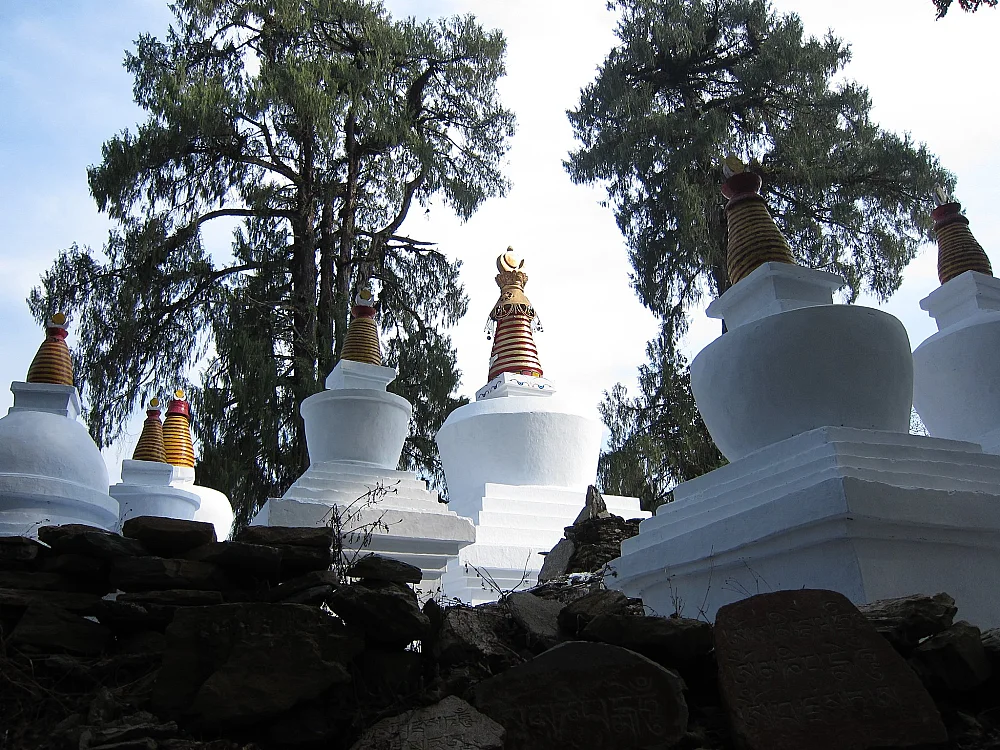
Tashiding is often called the “Heart of Sikkim.” It’s central to the Nyingma school of Tibetan Buddhism and anchors a sacred circuit that also includes Pemayangtse Monastery, Dubdi Monastery, and Khecheopalri Lake.
Surrounding hills hold meditation caves where saints once sought solitude. Inside the monastery, 60 to 70 monks keep daily rituals alive. Pilgrims come not just to pray, but to seek repentance and renewal. One legend even tells of a vase blessed by Guru Padmasambhava, hidden here and later rediscovered, with earthquakes and showers of flowers marking the moment.
Festivals and Rituals
If you can, time your visit with Bhumchu Festival - Tashiding’s grand event - celebrated in February or March. The name means “sacred water vase,” and the ritual centers around a centuries-old vessel sealed with holy water.
Each year, monks unseal it, check the level, and interpret it as an omen: overflowing means prosperity, empty spells hardship, half-full promises peace. The water is shared with devotees who travel from across Sikkim and beyond. Think of it as part spiritual ceremony, part community gathering, part Himalayan carnival.
Can’t make it then? Don’t worry. Daily pujas (prayers) fill the monastery with chants and the steady rhythm of drums.
Planning Your Visit
- Getting There: Tashiding sits in West Sikkim, about 19 km from Yuksom, 36–40 km from Pelling or Gyalshing, and 124 km (4–5 hours by road) from Gangtok. Closest airport is Bagdogra, then it’s a mix of taxis and shared jeeps.
- Timings: Open daily from 7 a.m. to 6–7 p.m. Entry is free, though donations are welcome.
- Best Time: March–June for mild weather and flowers, September–October for clear skies. February/March if you want the full Bhumchu experience.
- Tips: Wear sturdy shoes - the climb is steep. No photos inside prayer halls. Carry a jacket; even sunny days can turn chilly. And remember: quiet respect goes a long way here.
For stays, try homestays around Tashiding or base yourself in Pelling, where options range from simple guesthouses to heritage hotels. Nearby spots like Pemayangtse Monastery, Rabdentse ruins, and Khecheopalri Lake make great day trips.
Why It’s a Must-Visit
Tashiding isn’t just about history carved in stone. It’s about the hush of prayer flags in the wind, the glow of butter lamps at dusk, the sense of being somewhere both timeless and alive.
Whether you’re a pilgrim, a photographer, or a traveler chasing quiet corners of the Himalayas, Tashiding delivers. Come here with an open heart, and you might just leave with a lighter one.